UAE Sets Global Benchmark with Comprehensive Agentic AI Strategy for Government
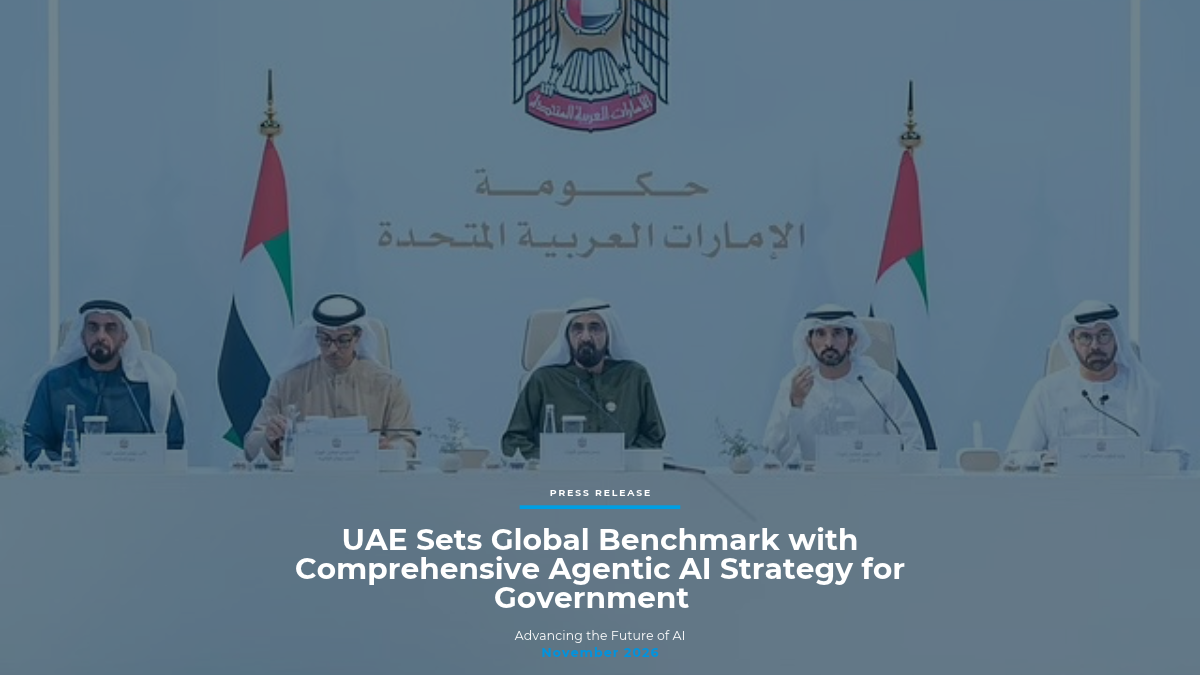
The UAE Cabinet has approved a comprehensive government strategy for AI assistants and reviewed plans to launch "Mira", an AI-powered personal government assistant expected to be available to government customers from March 2027. The Cabinet also endorsed FedAI, a secure national technology infrastructure designed to support AI-powered government services.
UAE Accelerates Government AI Adoption
Chaired by Sheikh Mohammed bin Rashid Al Maktoum, the Cabinet approved the new AI strategy as part of the UAE's wider digital transformation agenda. The initiative aims to improve government efficiency, streamline service delivery and strengthen the country's position as a leader in advanced technologies.
Key Highlights
- Comprehensive government AI strategy approved.
- FedAI endorsed as a unified national AI infrastructure.
- "Mira" AI-powered government assistant targeted for launch in March 2027.
- Federal entities directed to integrate services with the platform.
Introducing Mira and FedAI
"Mira" is designed to transform how people access government services by enabling natural language interactions with government entities. Citizens and residents will be able to communicate in their preferred language and access services through conversational AI experiences.
Supporting the initiative is FedAI, a secure and sovereign ecosystem for developing and operating AI-powered solutions across federal entities.
"Our goal is for the UAE government to be the fastest, most efficient and best prepared for the technologies of the future." – Sheikh Mohammed bin Rashid Al Maktoum.
What This Means for Businesses
The announcement highlights that successful AI adoption is not simply about deploying new tools. The UAE's approach combines technology, governance, infrastructure and workforce readiness to deliver measurable outcomes. Government targets include training 80,000 employees, achieving at least 90% adoption of Agentic AI systems, reducing operational time by 50%, and improving output quality and accuracy by 90%.
For organisations across the UAE, the message is clear: effective AI transformation starts with clear use cases, trusted data, strong governance, secure infrastructure and teams prepared to embrace new ways of working.
Conclusion
The UAE's AI strategy, FedAI platform and planned rollout of Mira represent a significant step towards AI-enabled public services and government innovation. Together, these initiatives aim to improve efficiency, simplify service delivery and create a foundation for large-scale AI adoption across the public sector.
For businesses, the initiative serves as a practical roadmap for AI transformation. Organisations should assess whether their systems, processes and people are ready for the next phase of AI adoption and whether the right foundations are in place to support long-term success.
At Live in the Cloud ME (LITC ME), we believe AI should form part of a broader technology strategy that combines innovation with security, governance and measurable business value. As AI adoption accelerates across the region, businesses that invest in these foundations today will be best positioned to realise the benefits tomorrow