
The Problem Isn't Your Technology
Most organisations don't start with broken systems.
They invest in the right tools at the right time. A CRM for sales. Finance software for accounting. Project management platforms for delivery. Customer support systems for service.
But as organisations grow, those systems often grow apart. Data becomes fragmented, workflows become manual, and teams lose visibility into the bigger picture.
What You Gain When Systems Work Together
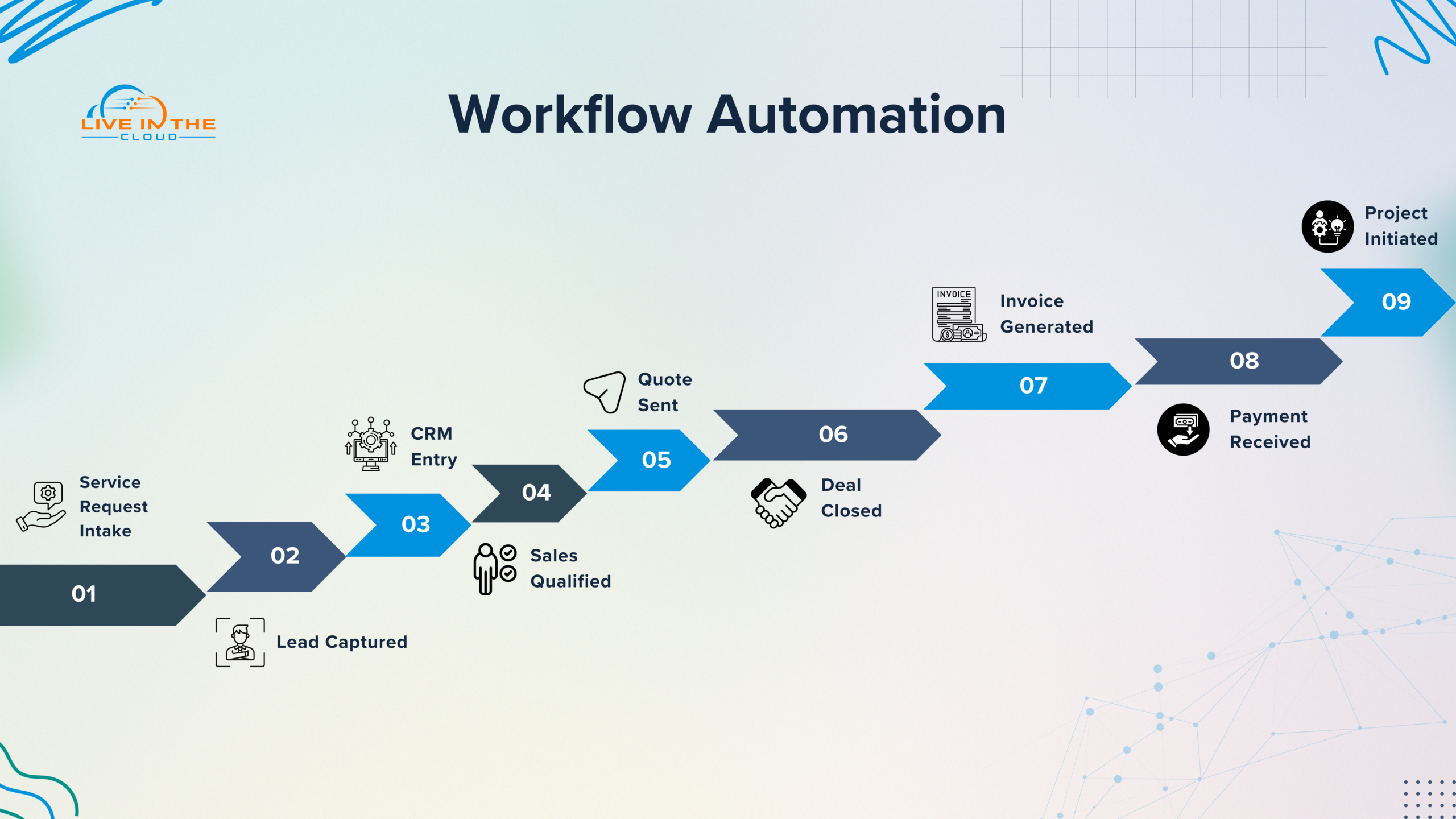
Picture the simplest workflow in any organisation:
BD generates lead → Sales closes the deal → Finance invoices → Logistics delivery.
If these steps live in fragmented systems, you get inconsistent data, manual handoffs, and operational drag.
Connected operations remove that friction entirely.
Here’s what that looks like:
- Data visibility moves automatically between departments
- Manual entry points disappear
- Workflows trigger at the right time
- Teams share one accurate version of information
This is where real optimisation begins, not by adding more tools, but by making the ones you already use work together.
Processes will shift and there is a learning curve, but the gains in accuracy, speed, and clarity consistently outweigh the effort.
Real-World Results from Connected Operations
Microsoft Power Automate
199% ROI
26,000+ hours saved annually
50% reduction in development effort
Key Takeaway
Automation delivers value when workflows connect departments rather than operate independently.
Zoho One
40% Faster Sales Cycles
30% Reduction in Operational Inefficiencies
Improved Reporting Accuracy
Key Takeaway
A connected platform creates visibility and consistency across departments
Salesforce + ERP Integration
20-30% Increase in Sales Productivity
More Accurate Forecasting
Better Revenue Visibility
Key Takeaway
Removing data silos improves decision-making and customer outcomes.
AI-Powered Operations
20-40% Productivity Improvement
Faster Decision Making
Smarter Workflows
Key Takeaway
AI performs best when integrated into existing business processes.
Real optimisation doesn't come from adding more tools. It comes from making the tools you already have work together.
Where Automation Delivers Immediate Impact
Sales & Customer Operations
- Intelligent lead routing
- Automated onboarding
- CRM integration
- Customer journey visibility
Finance & Approvals
- Automated approvals
- Faster invoicing
- Reduced reconciliation errors
- Full audit history
Service & Support
- Unified customer view
- SLA automation
- Automated escalations
- Faster issue resolution
Business Intelligence
- Real-time dashboards
- Cross-platform reporting
- Better forecasting
- Reduced spreadsheet dependency
Choosing the Right Technology Path
Unified Operations
Examples:
- Zoho
- Microsoft Dynamics
Best For:
Organisations seeking visibility across departments.
Enterprise Flexibility
Examples:
- Salesforce
- SAP
- Oracle
Best For:
Highly customised business processes.
Productivity-First Environments
Examples:
- Microsoft 365
- Teams
- Power Platform
Best For:
Fast adoption and workflow efficiency.
Choosing the Right Technology Path
Agility isn’t a buzzword - it’s a measurable business advantage. When systems connect and processes flow without friction, organisations reduce decision latency, remove operational drag, and strengthen governance. McKinsey research shows that companies with high process connectivity consistently outperform peers on speed, efficiency, and adaptability.
When your tools and data move together, the entire organisation becomes lighter, faster, and more responsive:
- Faster decisions because leaders see the full picture in real time
- More efficient teams because repetitive tasks disappear
- Better customer experiences because service teams have complete context
- Stronger governance because compliance is embedded into workflows
- Scalable growth because technology supports expansion instead of slowing it down
This kind of agility - not the choice of tool - is the real competitive edge.
Want to See What Automation Could Look Like for You?
Most organisations already own great tools - CRM systems, finance platforms, collaboration suites. The real problem isn’t the technology. It’s the gaps between them.
Those gaps create:
- Duplicate data entry
- Delayed handoffs
- Missed follow-ups
- Reporting blind spots
- Decisions made with partial information
Automation closes those gaps. It transforms fragmented processes into connected workflows that run reliably without constant human intervention. Imagine:
- A lead captured in your CRM instantly triggering invoicing, onboarding, or project setup
- Finance approvals moving end-to-end without email chains or bottlenecks
- Inventory, orders, or service updates syncing in real time across systems
- Industry benchmarks consistently show:
- Organisations that integrate key systems see up to 70 percent fewer financial errors
- Unified workflows cut operational costs by 20–30 percent and accelerate delivery timelines by 40 percent
- ROI on automation initiatives often exceeds 300 percent within three years
If you’re exploring how to streamline operations or unify your systems, begin with clarity, not tools. Map your workflows. Identify bottlenecks. Understand where automation can deliver the highest impact.
That’s how you build a technology ecosystem that works for you - not the other way around.